The Netherlands at a turning point: Quantum Valley must turn knowledge into industry
“If you’re not at the table, you’re on the menu.”
The Netherlands is at risk of losing its grip on one of the most strategic technologies of the century: quantum. As the global market accelerates, Dutch companies are leaving the country just as they begin to scale up, the stage where jobs, production capacity and long-term economic value are created.
Quantum Valley, a new industrial plan developed by the Dutch quantum ecosystem and included in a report led by former ASML chief executive Peter Wennink, is intended to prevent that value from slipping abroad. Its purpose is clear: to convert the Netherlands’ scientific strength into a mature quantum industry at home.
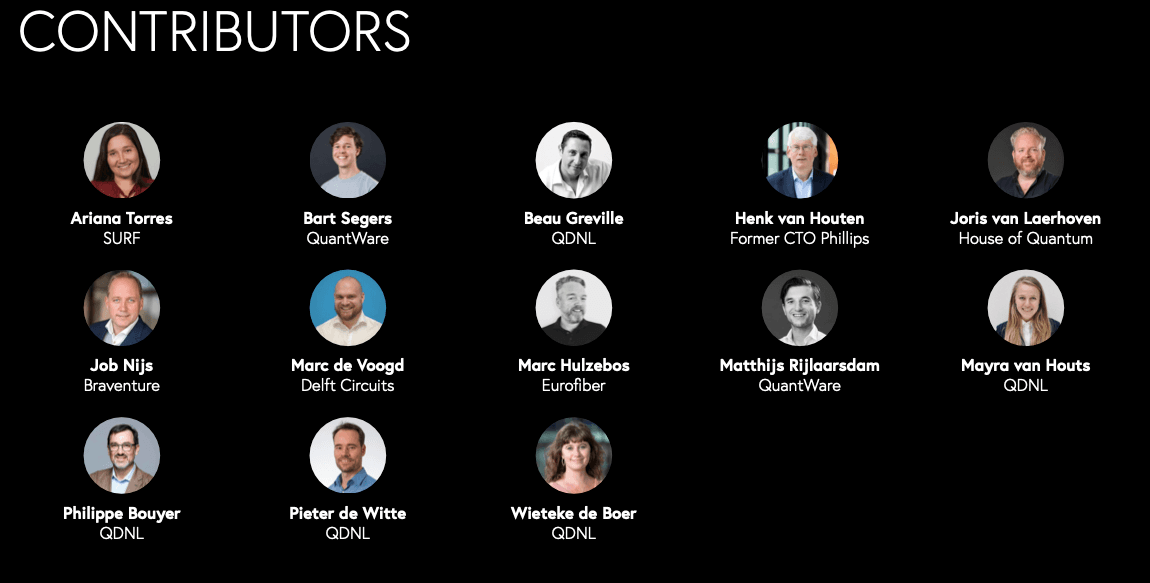
That is the message from Job Nijs, a member of the Supervisory Board at Quantum Delta NL and one of the plan’s co-authors. Nijs played a central role in bringing together the entrepreneurs, researchers, investors and policymakers involved in its development, including Quantum Delta NL, QuTech, Quantware, Delft Circuits, Eurofiber and SURF.
“The Netherlands is a scientific world leader,” he says. “But once quantum companies move beyond the startup phase, funding dries up. They then go to the United States or Asia, because that’s where capital is available. And where companies grow, that’s where production, talent and ultimately economic value will be found.”
The risk, he argues, is easy to see: without decisive follow-up policy, the Netherlands will continue to produce knowledge while other countries pocket the returns. “We’ll basically be financing other people’s economies.”
Global market
His warning comes at a moment when the global quantum market is expanding at remarkable speed. International analysts estimate that quantum technologies could reach a value of $1 to $2 trillion within the next decade. The potential applications range widely, from energy and advanced materials to pharmaceuticals, logistics, financial services and defence.
“We are in a decisive phase,” Nijs says. “The countries scaling up now will decide who dominates this market ten years from today.” The United States, China, the United Kingdom, Germany and Japan appear to share that view: all have been investing billions for years to secure their position in the quantum value chain. “That is no coincidence,” Nijs says. “Quantum is a key technology. If you’re not a player in it, you become strategically dependent on those who are.”
Quantum Valley
Quantum Valley was designed as a direct answer to that risk. The plan was developed within the Dutch quantum ecosystem at the request of Peter Wennink, with Quantum Delta NL as a driving force. It builds on the progress Quantum Delta NL has achieved in recent years with support from the National Growth Fund, helping to create a world-class Dutch quantum landscape marked by a growing number of startups and a leading academic position. That funding, however, ends in 2027.
Quantum Valley, which is intended to operate alongside Quantum Delta NL, focuses on the next step: industrialisation. A key element is the expansion of the hardware cluster around Delft, where a unique concentration of companies has emerged working on quantum chips, cryotechnology, control systems and testing platforms. “That didn’t happen by accident,” Nijs says. “There is a clear head start there.”
Yet many of those companies still operate at the pilot or prototype stage. Moving beyond that will require investment in factories, production lines and the underlying infrastructure needed for industrial-scale manufacturing. “Building a factory for a fast-growing but still young market is almost impossible without public involvement,” Nijs says. “That is why this is precisely the moment for government to step in.”
A similar logic applies to quantum internet, a field in which the Netherlands currently plays a leading international role. “It’s a position we can turn into economic value,” says Nijs. “But only if we invest now in infrastructure and use.” He draws a parallel to the emergence of the traditional internet, when the Netherlands became an international hub thanks to early investment in data exchange points. “That didn’t just happen,” he says. “It was built.”
Quantum Valley also argues for government to act as an early customer. Quantum computers exist, but remain in an early stage of development: expensive, scarce and limited in application. “Waiting for the market to take this up won’t work,” Nijs says. “By then you’re too late.” By procuring quantum technologies itself, government could build expertise, stimulate demand and help companies scale up, while also setting conditions on where development, production and talent growth take place. “It isn’t market distortion,” says Nijs. “It’s market creation.”
The total scale of investment included in the plan is €9.4 billion over ten years, through a mix of public and private funding. The public share varies, but is limited to the level required to unlock private capital. “It sounds like a huge amount,” Nijs acknowledges. “But it is the scale required to compete seriously, economically and geopolitically.” The projected returns are equally large: thousands of high-value jobs, new business activity and a lasting position in the global quantum value chain.
The choice, according to many in the Dutch quantum community, is now unambiguous. The Netherlands can continue building on the investments already made, even after the Growth Fund ends. Or it can retreat, and watch companies, knowledge and economic returns relocate elsewhere. Those who control critical technologies hold influence. Those who depend on others surrender it.
“If you’re not at the table, you’re on the menu,” Nijs says, echoing Wennink. “And we can still prevent that outcome.”