The past and future of developing meaningful technologies with and for society: the case of quantum for good
Reflection on the workshop findings
In an era of polycrisis, polarisation, Big Tech dominance, and democratic disenfranchisement, the question of how emerging technologies can be rendered meaningful with respect to the needs, values and expectations of societal stakeholders becomes ever more important. Quantum technologies provide a particularly timely testbed for thinking through this pressing question in a modern innovation context; how we answer this question has profound implications for realising the aspiration of ‘’Quantum for Good’.
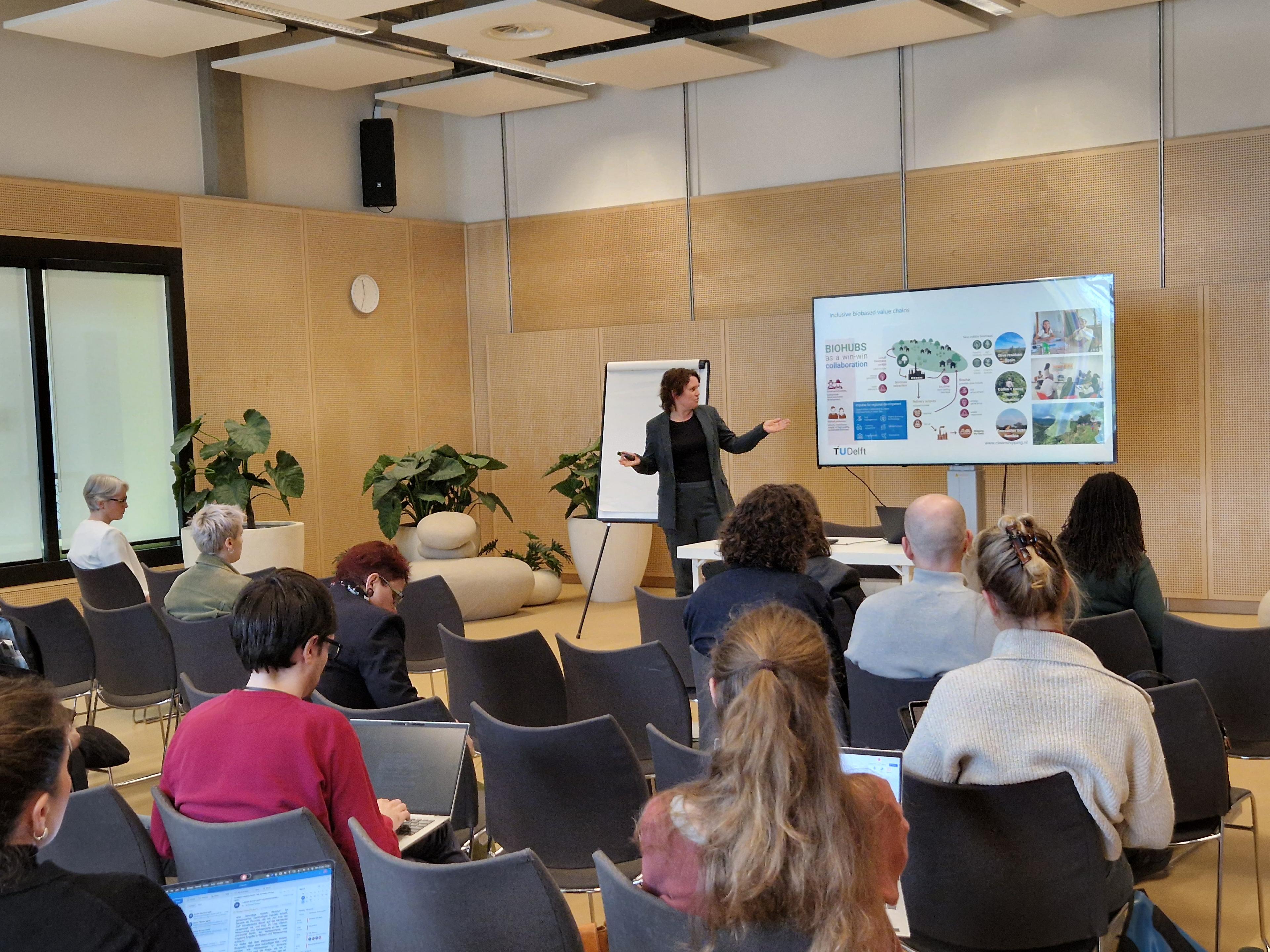
A recent workshop, organised by the Ethics of Quantum Technologies research team at TU Delft, set out to learn lessons from past and present attempts to develop societally meaningful technologies, to inform contemporary efforts to orient the innovation of quantum technologies towards ‘the Good’. An array of transdisciplinary experts, ranging from policymakers, quantum scientists, and ELSA researchers, were brought together for two days of informative talks and illuminating discussions.
Several significant insights emerged with relevance for rendering quantum technologies societally meaningful. On the one hand, the major challenge of implementing the democratic governance of and for meaningfultechnologies was acknowledged. On the other hand, there was shared recognition about the conditions that should be in place in order to genuinely pursue meaningful technologies. For instance, there is a need for clarity regarding the relevant and important issues to focus on, alongside knowledge and responsiveness regarding what specific technologies allow in terms of their deployment, and whether other technologies may be more appropriate.
The fundamental importance of shaping technological meaning democratically and in ways that promote solidarity was another important theme. A perspective that can support the goal of shared meanings is that of a multi-level innovation ecosystem – a complex web of mutual dependencies between diverse actors at different levels, centred around novel technological artefacts with their own material possibilities and limitations. Understanding these dependencies – and uncovering the resultant power imbalances to which they give rise – arose as being essential for achieving shared meanings with genuine relevance across the whole of society.
Another significant insight was that the meaningfulness of technology arises at the intersection of impact, adoption, and governance; societal meaning is achieved when these factors align to support transformative social change. This was reflected in, for example, the importance of meaningful standardisation of new technologies, ensuring that they remain relevantly connected to the needs and interests of stakeholders, and implemented at the appropriate level of technological readiness, so as not to suffocate potentially transformative innovation.
Lastly, an important open question was identified regarding the uniqueness of quantum compared to previous technologies, and whether there are unique obstacles to rendering quantum technologies societally meaningful. Several suggestions were put forward: quantum technologies are uniquely difficult to render societally meaningful due to public perceptions of quantum as mysterious, esoteric, and their impacts that are at a remove from in contrast to other more graspable technologies; the unique geopolitical context in which quantum technologies are emerging – and the narratives of competition and threat engendered by this context – make it especially difficult to render quantum technologies societally meaningful for all stakeholders.
These insights suggest several fruitful lines for further inquiry and set an agenda for the future of the aim of “Quantum for Good.” Developing quantum technologies in a societally meaningful way will require continuous collaboration between academia, policy, and society; the success of this transdisciplinary workshop therefore provides a model for future progress towards more meaningful innovation.
Get in touch with